
Embracing the Winter Blues: Let's Talk About Seasonal Affective Disorder (SAD)
Brittany Barberian • November 29, 2023
Introduction:
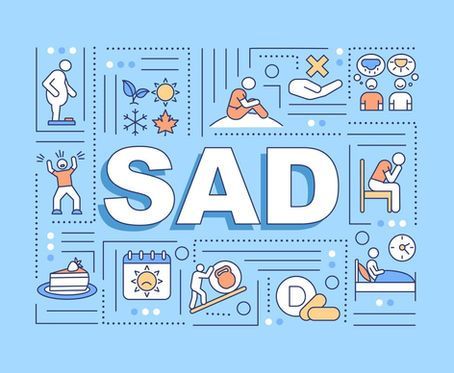
Hey there, winter warriors! As the days get shorter and the temperatures drop, do you find yourself feeling a little less jolly and a bit more "meh"? Don't worry; you're not alone! Today, we're diving into the cozy world of Seasonal Affective Disorder (SAD), the winter blues' official invitation-only club. So, grab your favorite blanket and a warm cup of cocoa – let's chat about what SAD is, why it happens, and how to turn those gray days into a winter wonderland.
1. What's the Buzz About SAD?
Seasonal Affective Disorder, or SAD for short, is like winter's grumpy sidekick. It's a type of depression that drops by when the days get shorter and sunlight becomes a rare commodity. Blame it on the circadian rhythm or Mother Nature's mood swings – either way, SAD likes to make itself at home during fall and winter.
2. Why Does SAD Choose Winter?
Imagine sunlight as the VIP guest at a party, and SAD as the friend who only shows up when the lights go down. Less sunlight during fall and winter messes with our internal clock and those brain chemicals (serotonin and melatonin) that dictate our mood and sleep patterns. Cue the winter blues!
3. Who's in the Club?
SAD doesn't play favorites – it can hit anyone, young or old. But if you've got a family history of SAD, a track record of dancing with depression, or you live where winter means more darkness than a mystery novel, you might find yourself an unwitting member of this exclusive winter blues club.
Signs and Symptoms – the Winter Blues Checklist:
- Mood that's chillier than the weather
- Netflix becoming your new best friend
- Sleep patterns doing a frosty cha-cha
- Feeling more tired than a snowman in July
- Concentration playing hide-and-seek
- Cravings for comfort food that rival Grandma's secret recipes
Conquering the Winter Blues – Your Guide to a Cozy Comeback:
Light Up Your Life:
Grab some sunshine whenever you can – open those curtains, take a stroll, or invest in a light therapy lamp. Think of it as giving your mood a sunlit boost.
Move That Booty:
Exercise is like a dance party for your brain! Find a winter-friendly activity you enjoy, whether it's snow angels or indoor yoga. Move, groove, and let the endorphins work their magic.
Snuggle Up to Self-Care:
A balanced diet, good sleep, and a cup of hot cocoa can do wonders for your mood. Treat yourself like the winter royalty you are – you deserve it!
When to Seek Help – the Cozy Couch Chronicles:
If the winter blues start feeling more like a never-ending snowstorm, it's time to chat with a friendly face. Our local counseling superheroes are here to lend an ear, provide warm-hearted advice, and help you craft a game plan for conquering the winter blues.
Embracing Your Winter Wonderland:
Remember, winter might be chilly, but your spirit doesn't have to be! Reach out to friends, family, or our counseling clinic for support. Let's turn those winter blues into a season of self-discovery, warmth, and maybe a snowball fight or two. Because hey, we're all in this winter wonderland together!
What to Expect During Spravato Treatment

Learn the Differences Between Spravato® and Ketamine

Learn how polyvagal theory in therapy and applied positive psychology support nervous system regulation, improving resilience, safety, and emotional healing.

Learn how to set healthy boundaries, reduce people-pleasing, and build stronger relationships through responsibility, freedom, and emotional clarity.

A reflection on self-awareness, healing after hurt, and nurturing secure, authentic relationships with yourself and the people around you.

Many clients and prospective clients solely focus on coping skills in their treatment. Coping skills are valuable tools in recovery and symptom management but there are additional actions you can take to build resiliency and improve your situation. Focusing on what needs to be done or changed all the time can lead to burnout or feelings of inadequacy. Improving symptoms and overall mental health does not have to be hard work all the time! It can be helpful for clients to balance the hard work and effort they are doing with “lighter” actions/activities. What can having fun look like? Having fun has a different meaning for everyone, think of activities or hobbies that you enjoy. Are you a sports fanatic? A crocheter? A reader? Maybe you like to watch reality television? Clients often do not consider how the things they do for enjoyment or just to pass the time can help process their mood, feelings, or symptoms. A clinician can see these same activities as their client practicing mindfulness, self care, and/or symptom management! How can relationships improve mental health? Anyone can benefit from having natural supports, meaning any person in your life who does not have a professional relationship with you. Natural supports can look like friends, family, fellow members of your church, recreational sports team, book club, etc. Any of these people you have a positive relationship with can be a natural support! Natural supports can help provide emotional and mental support when you are dealing with a stubbed toe, a major crisis, or anything in between. Why is this important for your mental health? Balancing the work and effort you are making every day with time spent doing enjoyable and/or relaxing activities helps build your resiliency. Resiliency is the capacity to withstand or recover from difficulties. Resiliency is crucial with managing mental health symptoms because it will help carry you through every day stressors and can help make major stressors easier to deal with. Alix Reilley LCMHC Candidate Source: NAVIGATE Individual Resiliency Training Manual 2014

Does your child feel anxious, scared, or stressed as they begin the new school year? These are common feelings that come up for kids as they anticipate the separation from their parents or caregivers, being in a new environment, and meeting new people. Many kids also feel stressed about adjusting to a new daily routine with higher academic expectations.

Coping skills are often associated with breathing techniques, meditation, and grounding techniques as stand alone skills. However, many people don’t realize they can integrate these skills into their hobbies, such as crafting. Many people struggle with certain aspects of coping skills that require them to focus and remain still, or may need replacement behaviors for harmful or maladaptive coping skills. But how can we combine hobbies and coping skills? Mindfulness Mindfulness means paying attention to the present moment, without judging or trying to change it. This involves observing your thoughts, feelings, and sensations without getting caught up in them. Sounds difficult right? It can be, but this blog is going to help you find ways you already practice mindfulness or help you develop a way to do so. Spending too much time planning, problem-solving, daydreaming, or thinking negative or random thoughts can be draining. It can also make you more likely to experience stress, anxiety and symptoms of depression. Practicing mindfulness exercises can help you direct your attention away from this kind of thinking and engage with the world around you. Mindfulness and Crafting While meditation, yoga, and walking are common mindful activities, crafting is a fun alternative. Crafting may help reduce stress in people, as well as develop creative confidence, skills, and aid in stress around perfectionism.. Not only is crafting fun, but playing with shapes, colors, and textures is stimulating and emotionally rewarding, as seen in the benefits of art therapy. Some great crafts to complete mindfully are: Crocheting/Knitting: crochet and knitting are wonderful mindfulness practices as the process can be meditative and repetitive for ease of focus, but crafters can also mindfully focus on the minor aspects of each step to note the beautiful creation that arises. Painting: By focusing on the present moment, mindful painting can help quiet the mind, reduce anxiety, and foster a deeper connection with oneself. Coloring: coloring requires sustained attention and concentration that create beautiful outcomes; patterns can be detailed and intricate or simple and enjoyable, perfect for anyone to try. Many more!
Mindfulness-Based Cognitive Therapy (MBCT) is a form of therapy that was created to treat depression, specifically treatment-resistant depression. Developed by Zindel Segal, John Teasdale, and Mark Williams, MBCT combines elements of cognitive therapy with mindfulness meditation. Research has shown that MBCT creates structural changes within brain areas that are associated with depression (Brewer et al., 2011). This means that MBCT reforms the brain, something that antidepressant medications have not been shown to do. This blog post will introduce the main ideas behind MBCT and briefly review the research backing this effective treatment option.

Review the basic framework of therapy sessions and treatment approaches in mental health counseling